Wednesday, 24 November 2010

iconoclasm

Iconoclasm
(From Wikipedia, the free encyclopedia)

Iconoclasm is the deliberate destruction within a culture of the culture's own religious icons and other symbols or monuments, usually for religious or political motives. It is a frequent component of major domestic political or religious changes. It is thus generally distinguished from the destruction by one culture of the images of another, for example by the Spanish in their American conquests. The term does not generally encompass the specific destruction of images of a ruler after his death or overthrow (damnatio memoriae), for example Akhenaten in Ancient Egypt.

People who engage in or support iconoclasm are called iconoclasts, a term that has come to be applied figuratively to any person who breaks or disdains established dogmata or conventions. Conversely, people who revere or venerate religious images are (by iconoclasts) called iconolaters. In a Byzantine context they are known as iconodules, or iconophiles.

Iconoclasm may be carried out by people of a different religion, but is often the result of sectarian disputes between factions of the same religion. The two Byzantine outbreaks during the 8th and 9th centuries were unusual in that the use of images was the main issue in the dispute, rather than a by-product of wider concerns. In Christianity, iconoclasm has generally been motivated by a literal interpretation of the Ten Commandments, which forbid the making and worshipping of "graven images", though the topic of Biblical law in Christianity has always been in dispute.


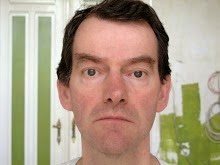
Five printed self portraits on Epson Premium Glossy photo paper, format A3+ = 32,9 x 48,3 cm.

Tuesday, 23 November 2010

some photo's of the research proces


A photo of a geometrical ornament in the Pergamon Museum in Berlin was the exemple for the drawings shown here below. The photo is printed on an A3+ format sheet of Epson Premium Glossy photo paper.


The same photo after sandpapering it, after stabbing it and cutting it. A ghost of the image remains.


Four drawings of the Pergamon ornament. Two drawings with pencil on paper and two drawings with watercolours. On 300 grams of Arches paper with a format of 31 x 41 cm.


The same four drawings after, on the top left, erasing it with an eraser.
On the top right the drawing is vanished by sandpapering it.
On the bottom left the watercolour drawing is stabbed with an awl and screwdriver.
On the bottom right the watercolour is cut into pieces.

The destructive actions to photo and drawings is filmed. Soon it will be edited and posted here and on You Tube.

Friday, 12 November 2010

four created drawings to destruct


Two pencil drawings and two watercolours of the same pattern are almost finished. Within two weeks the destruction of those four drawings is going to happen. It will be documented by filming it.

Tuesday, 9 November 2010

Wednesday, 20 October 2010

smart & stupid


Creation & Destruction =
Apollonian & Dionysian
Good & Bad
Smart & Stupid
Order & Chaos
Civilisation & Barbarism
Love & Hate
Compassion & Aggression
Beauty & Ugliness

Thursday, 7 October 2010

first three destructions


Three small surfaces for paintings (linen on stretchers) from about 30 x 50 cm are mutilated with sandpaper, with a cutter and with an awl. The action, or performance of destroying itself is filmed. Soon, within two weeks, the editing will be done and the film will be shown here.

Tuesday, 5 October 2010

destructed linen surface


Destructing a linen surface by stabbing it with an awl.


Monday, 4 October 2010

white & black


Painting a white sheet of paper with Ivory Black watercolour paint is adding paint which changes the white surface into spotty black. Can it be seen as a destruction of the original white? Or is it a change of a white surface into a black surface? It is difficult to see it as a destructive act, it is transformation in stead of destruction. Because there is no violence or aggression in painting the white surface black?

surface research plan 2010 - 2011 # 6

The “creation & destruction” research at the Rietveld Academie

How to make the “creation & destruction” artistic research meaningful for students?
I will start by giving a short lecture on the new research project for the coordinators. With their help and in consultation with the departmental teachers I would like to find a small number of students who may be interested in the research question. I hope to find these students by presenting my research subject and the possible research questions to the interested departments. The students who want to participate will not be expected to function as research assistants. The idea is for them to set up an Artistic Research of their own based on the same subject and with a few specific research questions. Holding regular meetings in which experiences or developments are presented to the research group can lead to the exchange of ideas, materials, concepts, new research questions and relevant literature. It might develop into a collaboration of researchers each studying a different section. Each one is researching a part of the complete picture to be formed later.

blue

Tromaderians consider anything blue extremely pornographic.

Friday, 24 September 2010

surface research plan 2010 - 2011 # 5

Research questions:
The destruction of the plain paper is the creation of another, new surface to draw on, how far can the destruction be taken while maintaining a surface which can be ‘refined’ into a drawing?
Is inflicting acts of destruction on plain paper/linen not iconoclasm? Is the destruction of figurative drawings iconoclasm? Can the phenomenon of iconoclasm be executed again and how?
Can the mutilation, and ultimately the destruction, of personally drawn figurative images be carried out with different motives? Motivated by iconoclasm, motivated by fetishism?
Does the destruction of the drawing change its symbolical, financial or emotional value? The patina of destruction?
Creating = destroying? Destroying = creating?
Can you make drawings with the frenzy, vitality, aggression and negativity inherent to (total) destruction rather than with the deliberate, investigative, presuming, expectant and positive inventiveness inherent to creating?
Destruction on surfaces is two dimensional, what is the difference in destructing three dimensional objects?