Friday, 11 February 2011

moses and monotheism by sigmund freud


Volz expresses himself still more explicitly. He says : "that the heaven-soaring work of Moses was at first hardly understood and feebly carried out, until during the course of centuries it penetrated more and more into the spirit of the people and at last found kindred souls in the great prophets who continued the work of the lonely Founder."
With this I have come to an end, my sole purpose having been to fit the figure of an Egyptian Moses into the framework of Jewish history. I may now express my conclusion in the shortest formula: To the well-known duality of that history two peoples who fuse together to form one nation, two kingdoms into which this nation divides, two names for the Deity in the source of the Bible we add two new ones : the founding of two new religions, the first one ousted by the second and yet reappearing victorious, two founders of religions, who are both called by the same name Moses and whose personalities we have to separate from each other. And all these dualities are necessary consequences of the first: one section of the people passed through what may properly be termed a traumatic experience which the other was spared.

MOSES AND MONOTHEISM, SIGMUND FREUD
TRANSLATED FROM THE GERMAN BY KATHERINE JONES
PUBLISHED BY THE HOGARTH PRESS AND THE INSTITUTE OF PSYCHO-ANALYSIS
1939

Wednesday, 26 January 2011

short story about IDOLATRY in 5 images

Nicolas Poussin, the golden calf


The best way to make people forget an idolatrous rite is to put another rite in its place.

Enguerand Quarton, piéta


The Christians followed the same principle by building their churches on the ruins of pagan temples and by observing their feasts on the dates of pagan festivals.

Hanri Jacobs, midi / solange, paysage losange


For the same reason, Moses had to institute many dietary and sacrificial prescriptions in order to occupy the terrain held by the Sabians and their idolatrous ways,


Henri Jacobs, quartet


"so that all these rites and cults that they practised for the sake of the idols, they now came to practise in the honor of god."

Henri Jacobs, two drawings of a symbolon


The divine strategy was so successful that the Sabians and their once mighty community fell into oblivion. (Jan Assmann, Moses the Egyptian)

Wednesday, 12 January 2011

the idol shop

Illustration from a Moravian haggadah of 1737, based on the printed Amsterdam haggadah of 1712.


Abraham and the idol shop of his father Terah.

Terah, Abraham's father, was an idol worshipper. One day Terah had to leave the store in which he sold idols. He left Abraham to manage the store in his absence. A man came and wanted to buy an idol. Abraham asked him "How old are you?" And the man responded "Fifty or sixty years old." Abraham then said "Pitiful is the man who is sixty and worships idols that are only one day old." So the man left in embarrassment.
Once came a woman with an offering of fine flour. She said to Abraham "Here, take it and bring it before the idols." Abraham stood up, took a stick, broke all the idols, and put the stick back in the hands of the biggest idol among them. When his father returned he asked "Who did this to them?" Abraham answered "I will not deny you the truth. A woman came with an offering of fine flour and asked me to bring it before them. So I brought it before them and each said "I shall eat first." Then the biggest one stood among them, he took a stick in his hand and broke them all." So Terah said to him "Why do you mock me? Do these idols know anything to speak and move?" And Abraham replied "Won't your ears hear what your mouth speaks?"

Midrash Rabbah, Noah, portion 38, section 13, translated by Shai Lavi

second commandment

The exhibition "iconoclash, beyond the image wars in science, religion and art" in the "Center for Art and Media" in Karlsruhe from May to August 2002 is about the second commandment: "You shall not make for yourself an idol in the form of anything in heaven above or on earth beneath or in the waters below". Bruno Latour proposes the following questions:
Are we sure we have understood it correctly?
Have we not made a long and terrifying mistake about its meaning?
How can we reconcile this request for a totally an-iconic society, religion and science with the fabulous proliferation of images that characterizes our media-filled cultures?
If images are so dangerous, why do we have so many of them?
If they are innocent, why do they trigger so many and such enduring passions?

Thursday, 16 December 2010

Why do images trigger so much passion?


"Freud is perfectly right in insisting on the fact that we are dealing in Egypt with the first counter-religion in the history of humanity. It is here that, for the first time, the distinction has been made (by Akhenaton) that has triggered the hate of those excluded by it. It is since this distinction that hatred exists in the world and the only way to go beyond is to go back to its origins." (Jan Assmann, Moses the Egyptian)
 Bruno Latour : What we propose here in this catalogue "Iconoclash, beyond the image wars in science, religion, and art" is an archeology of hatred and fanatism.
Why ?
Because we are digging for the origin of an absolute - not a relative - distinction between truth and falsity, between a pure world, absolutely emptied of human-made intermediaries and a disgusting world composed of impure but fascinating human-made mediators.
"If only, some say, we could do without any images. How so much better, purer, faster our access to God, to Nature, to Truth, to Science could be." To which other voices answer :
"Alas, we cannot do without images, intermediaries, mediators of all shapes and forms, because this is the only way to access God, Nature, Truth and Science."

("La vérité est image mais il n'y a pas d'image de la vérité." Marie-José Mondzain)

What has happened that has made images the focus of so much passion? To the point that destroying them, erasing them, defacing them, has been taken as the ultimate touchstone to prove the validity of one's faith, of one's science, of one's critical acumen, of one's artistic creativity?

Furthermore, why is it that all those destroyers of images, those "theoclasts" those iconoclasts, those "ideoclasts" have also generated such a fabulous population of new images, fresh icons, rejuvenated mediators: greater flows of media, more powerful ideas, stronger idols?

And what has happened to explain that after every icono-crises infinite care is taken to reassemble the smashed statues, to save the fragments, to protect the debris? As if it was always necessary to apologize for the destruction of so much beauty, so much horror; as if one was suddenly uncertain about the role and cause of destruction that, before, seemed so urgent, so indispensable; as if the destroyer had suddenly realized that something else had been destroyed by mistake, something for which atonement was now overdue.

Why have images attracted so much hatred?
Why do they always return again, no matter how strongly one wants to get rid of them?
How is it possible to go beyond this cycle of fascination, repulsion, destruction, atonement, that is generated by the forbidden-image worship?

(Bruno Latour, Peter Weibel : "Iconoclash, beyond the image wars in science, religion, and art")

Tuesday, 14 December 2010

books


Three books to study :

Iconoclash, beyond the image wars in science, religion, and art
Edited by Bruno Latour and Peter Weibel
2002 ZKM, Karlsruhe

Moses the Egyptian
The memory of Egypt in Western Monotheism
Jan Assmann
1997, Harvard University Press

Idols of the Market
Modern Iconoclasm and the Fundamentalist Spectacle
Sven Lütticken
2009, Sternberg Press

Imi Knoebel, 30 stretchers, 1968 - 1969

Friday, 10 December 2010

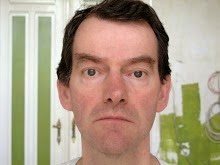
selfportrait iconoclasm


Is it possible to commit iconoclasm on a selfportrait?
Yes, it is possible to commit iconoclasm on a photographic portrait of myself.

Images don't cry, nor laugh.
Because of a crises in image representation artists are restless seeking for expressing their selves in not known ways. The crises of image representation is going to help artists in an interesting necessity to destroy figurative images. Figurative images have to destroy abstract pictures.
Iconoclasm is the future !

Thursday, 9 December 2010

iconoclasm II


The idea for a ban on images, how and why is it born?

In the ten commandments, inscripted on two stone tablets which God wrote with his finger and delivered by Moses, it is on a very important second place :

I am the Lord your God, who brought you up out of the land of Egypt, out of the house of slavery;
1 : Do not have any other gods before me.
2 : You shall not make for yourself an idol, whether in the form of anything that is in heaven above, or that is on the earth beneath, or that is in the water under the earth.
3 : You shall not bow down to them or worship them; for I the Lord your God am a jealous God, punishing children for the iniquity of parents, to the third and the fourth generation of those who reject me, but showing steadfast love to the thousandth generation of those who love me and keep my commandments. 

Because images can be powerful and therefore dangerous?
People are simple and scared and therefore they like to worship an image, of a golden calf for example. Is it that bad? God is a jealous god and that is very human quality. He or she or it has no form, god is fire, or light, sound, clouds, thunder and lightning.
Why is that jealous god so afraid of image making?
Abstract or figurative images are they equal from power?
The most powerful images are pornographic images?

"The more power pictures have, the less we seem to know about how they operate"
(Peter Weibel in Iconoclash).
To combat the figurative image, you must first acknowledge, admire and confess the figurative image?
Idolatry and iconoclasm are finally dealing with the pornographic image?
Powerful images in the vast flood of images today are images of what? Of sex, of violence, of war, of death? 


Images don't cry...

Wednesday, 24 November 2010

iconoclasm

Iconoclasm
(From Wikipedia, the free encyclopedia)

Iconoclasm is the deliberate destruction within a culture of the culture's own religious icons and other symbols or monuments, usually for religious or political motives. It is a frequent component of major domestic political or religious changes. It is thus generally distinguished from the destruction by one culture of the images of another, for example by the Spanish in their American conquests. The term does not generally encompass the specific destruction of images of a ruler after his death or overthrow (damnatio memoriae), for example Akhenaten in Ancient Egypt.

People who engage in or support iconoclasm are called iconoclasts, a term that has come to be applied figuratively to any person who breaks or disdains established dogmata or conventions. Conversely, people who revere or venerate religious images are (by iconoclasts) called iconolaters. In a Byzantine context they are known as iconodules, or iconophiles.

Iconoclasm may be carried out by people of a different religion, but is often the result of sectarian disputes between factions of the same religion. The two Byzantine outbreaks during the 8th and 9th centuries were unusual in that the use of images was the main issue in the dispute, rather than a by-product of wider concerns. In Christianity, iconoclasm has generally been motivated by a literal interpretation of the Ten Commandments, which forbid the making and worshipping of "graven images", though the topic of Biblical law in Christianity has always been in dispute.


Five printed self portraits on Epson Premium Glossy photo paper, format A3+ = 32,9 x 48,3 cm.

Tuesday, 23 November 2010

some photo's of the research proces


A photo of a geometrical ornament in the Pergamon Museum in Berlin was the exemple for the drawings shown here below. The photo is printed on an A3+ format sheet of Epson Premium Glossy photo paper.


The same photo after sandpapering it, after stabbing it and cutting it. A ghost of the image remains.


Four drawings of the Pergamon ornament. Two drawings with pencil on paper and two drawings with watercolours. On 300 grams of Arches paper with a format of 31 x 41 cm.


The same four drawings after, on the top left, erasing it with an eraser.
On the top right the drawing is vanished by sandpapering it.
On the bottom left the watercolour drawing is stabbed with an awl and screwdriver.
On the bottom right the watercolour is cut into pieces.

The destructive actions to photo and drawings is filmed. Soon it will be edited and posted here and on You Tube.

Friday, 12 November 2010

four created drawings to destruct


Two pencil drawings and two watercolours of the same pattern are almost finished. Within two weeks the destruction of those four drawings is going to happen. It will be documented by filming it.

Tuesday, 9 November 2010